MICADAS User Workshops
These workshops, for the rapidly growing global user community of MIni CArbon DAting Systems (MICADAS), are designed to deepen participants’ understanding of MICADAS and its peripherals (i.e., EA-GIS, CHS-GIS, Cracker-GIS; EA-AGE3; EA-IRMS-AGE3) and to develop best practices for instrument operation and data analysis.
The 2nd MICADAS User Workshop will be held on the UCI campus on September 9–10, 2026, co-organized by KCCAMS (UCI), NOSAMS (WHOI) and AEL-AMS (uOttawa).
Who Should Attend? The workshop is intended for individuals who currently have a MICADAS or related instrument at their institution, or who are actively planning to acquire one. Attendees are expected to share best practices, recent advances, successes, and challenges related to their MICADAS and peripherals.
Logistics. The workshop will have hybrid (online/in-person) morning sessions and in-person-only afternoon sessions. Attendance is free, but attendees are responsible for the cost of their travel, lodging, and food. Information about local hotels with UCI-negotiated pricing can be found here. The closest international airport is Los Angeles (LAX), the closest regional airport is Orange County (SNA). More information on how to visit the KCCAMS facility can be found here.
Join the MICADAS Google Group – If you are not yet a member of the MICADAS Google Group, we encourage you to join by following these three simple steps:
Visit Google Groups: https://groups.google.com/my-groups
Search for “MICADAS“
Click “Ask to Join“
Registration & More Information – For further details and to register for the workshop, please complete this google form (or contact Prof. Claudia Czimczik – czimczik@uci.edu)
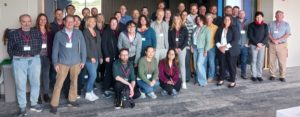 The 1st MICADAS user workshop took place from September 16-17, 2024 at the NOSAMS facility in Woods Hole, MS, USA. It was organized by radiocarbon scientists from NOSAMS (WHOI), KCCAMS (UCI), and YASIC (Yale). The workshop was held to discuss (1) best practices, advances, successes, and issues encountered with the MICADAS, (2) solutions and potential approaches to address any common problems, and (3) best communication mechanisms for a MICADAS user group. The meeting format was morning sessions for laboratory presentations/reports. Afternoons were reserved for open discussion, a laboratory tour, and a final session to identify a collective path forward.
Radiocarbon Short Course
The Radiocarbon Short Course is a 1-week training course for senior undergraduate students, graduate students, postdocs, researchers and technicians with broad interests in ecology and earth system science who are planning on, or are currently, using radiocarbon techniques as part of their research, and wish to expand their understanding of this tool. The knowledge is available in our book Radiocarbon & Climate Change.
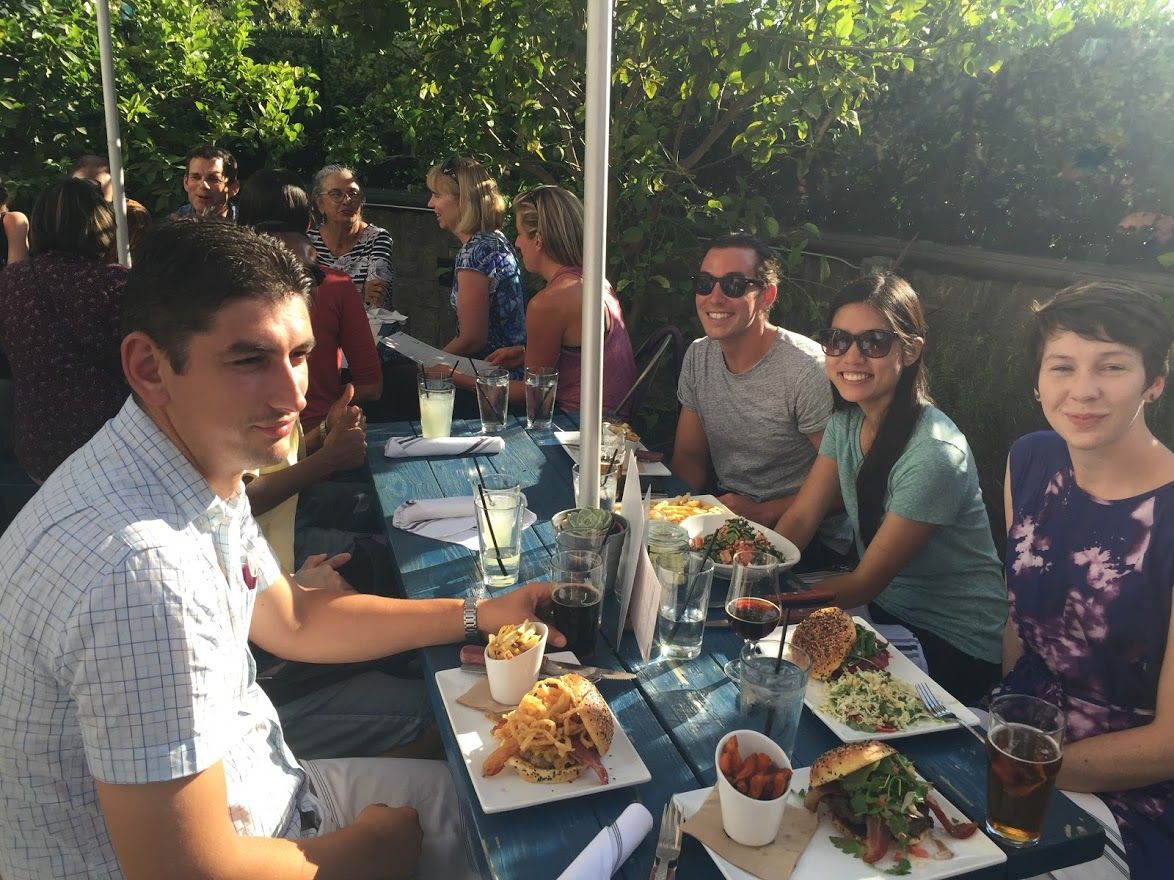
The course used a mixture of lectures, short talks, active learning activities, and networking sessions to facilitate research and interactions. Lectures introduce participants to the use of radiocarbon in carbon cycle, environmental, and ecological research, with examples from marine and terrestrial systems and the atmosphere. Hands-on activities focus on creating a tracer-free lab environment and avoiding contamination in the field and lab, collecting samples in the field, choosing standards and blanks, processing and analyzing samples in the laboratory, and analyzing, reporting, and interpreting radiocarbon data. Poster presentations and social events offer networking opportunities.
The course is offered at the KCCAMS facility or collaborating institutions and taught by KCCAMS researchers and staff and radiocarbon experts from the Max-Planck-Institute for Biogeochemistry in Jena, Germany, Northern Arizona University in Flagstaff, AZ, and GNS Science, New Zealand.
The next Short Course is offered from Jul 13-17 2026 at the the MPI-BGC. Find more information and register: here
Recent Short Courses
2021. live on zoom
2019. UC Irvine
2017. MPI-BGC
2016. UC Irvine
2014. UC Irvine
2012. MPI-BGC
2011. UC Irvine

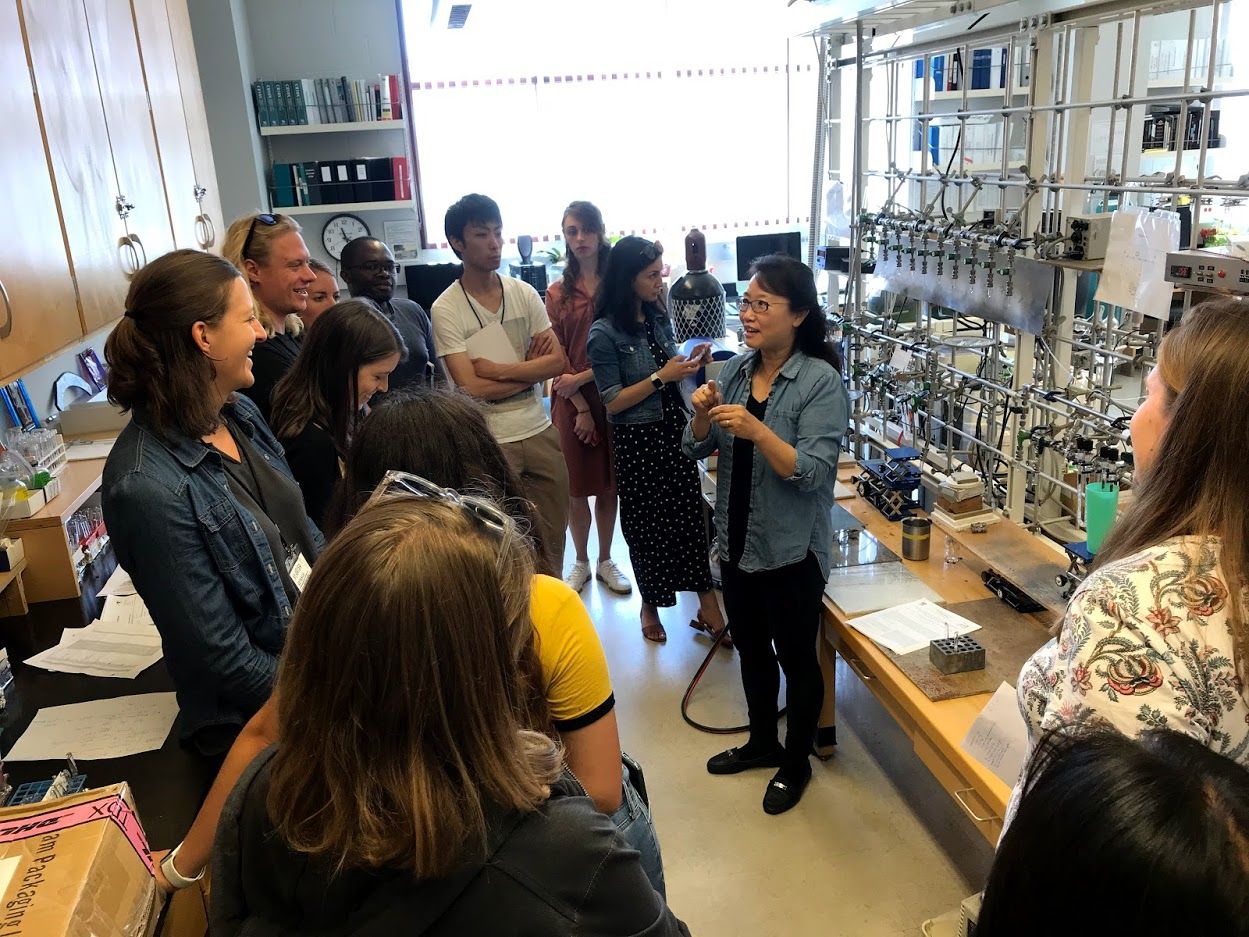
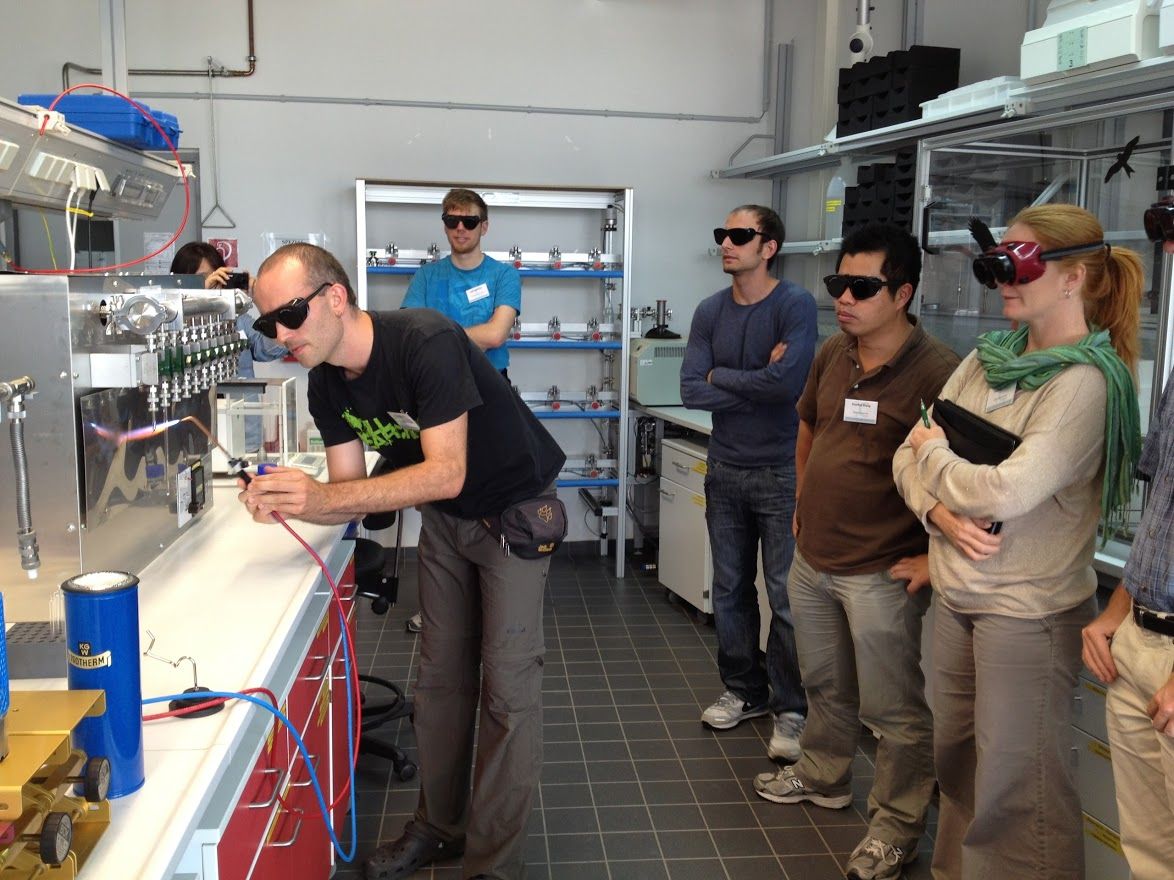
- KCCAMS scientist X. Xu explains how plant samples are converted to graphite for radiocarbon analysis with accelerator mass spectrometry during the 2019 Radiocarbon Short Course at UC Irvine.
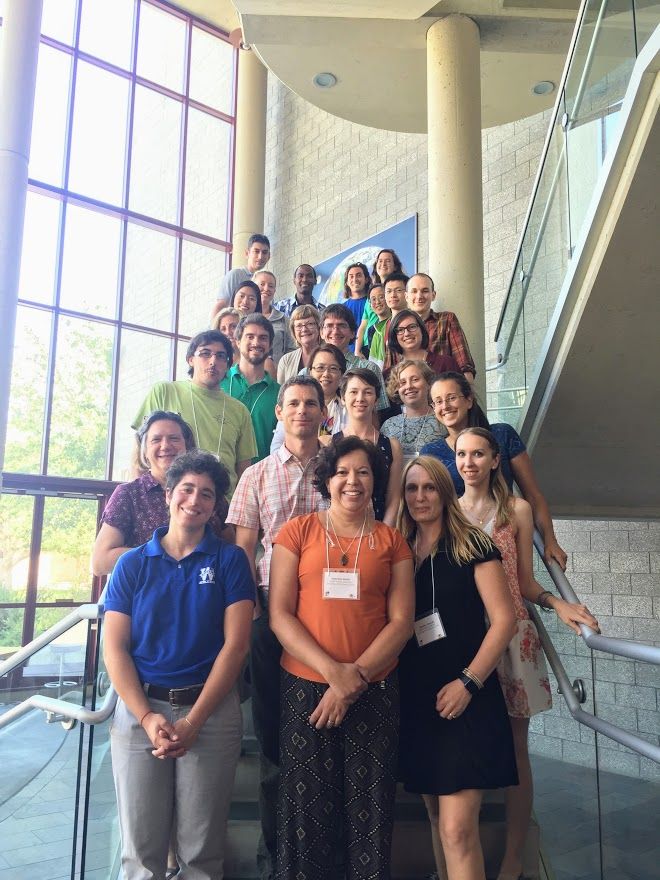
- Participants and instructors of the 2016 Radiocarbon Short Course at UC Irvine.
- Participants and instructors of the 2016 Radiocarbon Short Course at UC Irvine. Photo credit: C. Czimczik
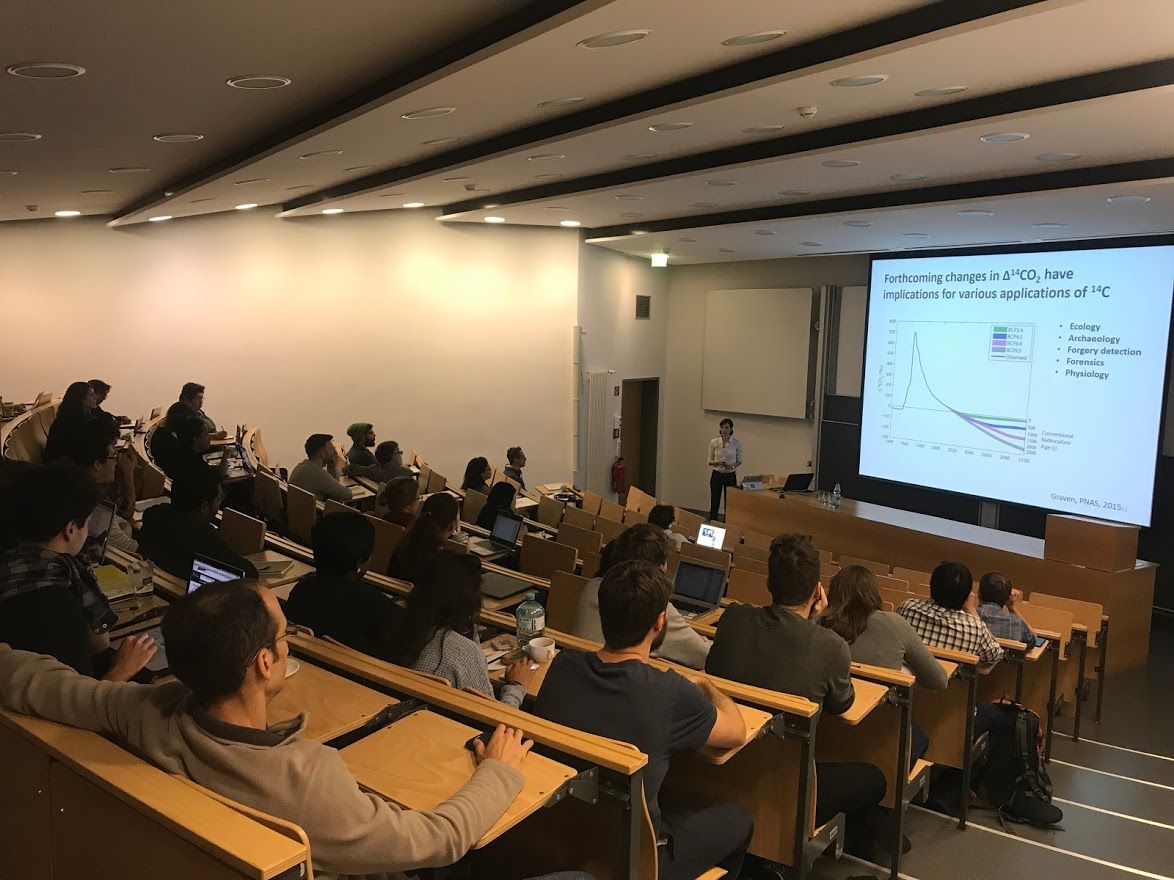
- Guest lecturer H. Graven discusses how 14CO2 can be used to inform carbon emission models during the 2017 Radiocarbon Short Course at the MPI-BGC.
- MPI-BGC postdoctoral scholar J. Muhr demonstrates how samples are evacuated for combustion during the 2017 Radiocarbon Short Course at the MPI-BGC.

Erv Taylor (-2019)
Radiocarbon-Champion, Scientist, Teacher, Colleague, Friend & Instructor of the Radiocarbon Short Course
Prof. emeritus University of California, Riverside, Department of Anthropology
Ph.D. 1970, Anthropology, University of California, Los Angeles
Contact
W. M. Keck Carbon Cycle Accelerator Facility
Department of Earth System Science
University of California, Irvine
Irvine, CA 92697-3100, USA

Paleoclimate &
Accelerator Mass Spectrometry
J. Southon (jsouthon@uci.edu)
H. Martinez De La Torre (hamartin@uci.edu)
G. Santos (gdossant@uci.edu)
B321 Croul Hall
Phone: +1 949 824-3674
Marine Biogeochemistry
B. Walker (brettw1@uci.edu)
E. Druffel (edruffel@uci.edu)
S. Griffin (sgriffin@uci.edu)
2212 Croul Hall
Phone: +1 949 824-3286
Terrestrial Biogeochemistry &
Aerosol
X. Xu (xxu@uci.edu)
C. Czimczik (czimczik@uci.edu)
G. Santos (gdossant@uci.edu)
2222 & 2313 Croul Hall
Phone: +1 949 824-3444
MICADAS
G. Santos (gdossant@uci.edu)
C. Czimczik (czimczik@uci.edu)
Z. Wang (zichew31@uci.edu)
2313 Croul Hall